

Folarin Balogun and the Easiest Legend Never Made
Folarin Balogun had one shot. Not at a goal—at immortality.
On July 6, 2026, the American striker received a red card during the Round of 32 match against Bosnia and Herzegovina. Under FIFA’s competition regulations, the card mandated an automatic one-game suspension. He would miss the Round of 16 match against Belgium. The mechanism was clear. The precedent was absolute. The outcome was determined.
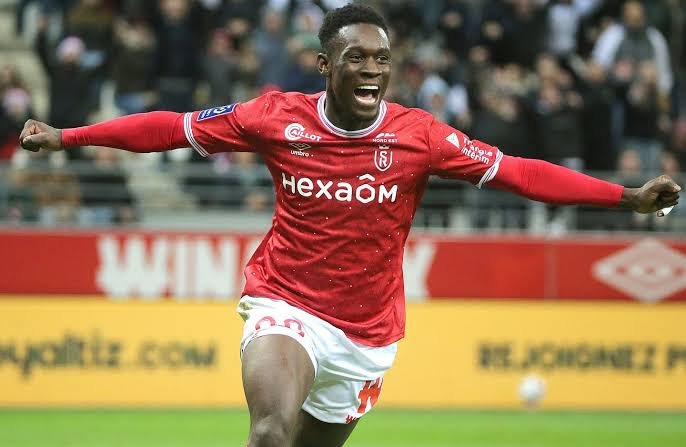
Then President Trump called FIFA President Gianni Infantino and asked for a reversal. Infantino, apparently believing that international athletic governance exists in the same dimensional space as hospitality, obliged. Within hours, Article 27 of the FIFA Disciplinary Code was invoked—the same article that had been used, seven months earlier, to defer two-thirds of Cristiano Ronaldo’s three-match ban for actually committing violent conduct: elbowing Ireland defender Dara O’Shea in the back during Portugal’s World Cup qualifier. Ronaldo served one inconsequential match and walked into the tournament unscarred. UEFA said nothing.
Balogun was cleared to play against Belgium. The system had spoken. Corruption had opened a door.
And he walked through it.
Balogun’s moment was structurally perfect for refusal. The mathematics of it were clean:
Belgium’s starting lineup was artfully depleted—De Bruyne, Doku, and Lukaku were all on the bench. This wasn’t a team desperate for their talismanic players. This was a team so confident in their ability to dismantle the United States that they sent their second string. Belgium’s contempt was architectural, and it turned out to be justified. The final score was 4–1. Belgium’s superiority was never in doubt. Balogun’s presence on the pitch changed nothing.
He had ninety minutes to prove this. One clear chance against Courtois. Nothing. No goals, no assists, no salvageable moment. His availability, gifted by fascist interference, produced exactly zero on the stat sheet.
Had he refused — had he sat on the bench and watched his team lose anyway — the calculus would have inverted entirely. The cost to him would have been nothing. One match he was going to lose regardless. And the return would have been absolute: transformation into the kind of figure the world builds mythology around.
The comparison is unavoidable, and it cuts like a blade.
Muhammad Ali didn’t become legendary because he was the best boxer of his era, though he was. He became immortal because he refused induction into the military during the Vietnam War. He sacrificed three years of his prime. He sacrificed millions of dollars. He sacrificed his heavyweight title. The cost was astronomical. The return was eternity—a place in human memory that transcends sport entirely, that touches the architecture of conscience itself.
Balogun’s cost would have been infinitesimal. His return would have been the same: a permanent place in the mythology of sport. Not for what he did on the pitch — nothing memorable happened there — but for what he refused to accept off it.
Imagine the narrative: An American striker, given corrupt intervention by his nation’s president, rejects it and sits out the match anyway. Imagine the photographs. Belgian players, having just demolished the USA 4–1, walking across the pitch to find the one American who chose conscience over availability and shaking his hand. Imagine that image rippling through fifty years of football history, not as a footnote but as a structural moment. The moment someone chose to preserve the integrity of the beautiful game.
Instead, there is nothing. A 4–1 loss. A forgettable performance. A man who was handed the easiest path to immortality in the history of competitive sport and chose to put on his cleats.
The FIFA machinery—corrupt, baroque, functionally indifferent to rule of law—had operated exactly as designed. The same apparatus that had quietly shielded Ronaldo, that systematizes favoritism toward politically connected nations and superstars, that applied three-game bans to Armenian and Burundian players while deferring two of Ronaldo’s three under identical charges, had simply done what it always does: bent itself in service of power.
The difference this time was visibility. Trump made the quiet part loud. And in his typical unabashed, ignorant candor confessed, “I didn’t know what the hell a red card was.” UEFA, which had maintained elegant silence when Ronaldo benefited from Article 27, suddenly erupted. The hypocrisy wasn’t incidental — it was structural. These institutions don’t object to corruption. They object to obvious corruption, to the kind that threatens plausible deniability and forces confrontation with what the system actually is.
Sepp Blatter’s comment — “Red cards are not overturned by political phone calls” — wasn’t a defense of integrity. It was a professional offense: We overturned them through dinners and back channels, you amateur. You violated the tradecraft.
But all of that — the corruption, the hypocrisy, the structural rot — was secondary. It was stage dressing. The real story was Balogun’s response to it.
Mia Hamm once quoted a football legend: “I learned a long time ago that there is something worse than missing the goal, and that’s not pulling the trigger.”
He was handed a moment so clean, so simple, so zero-cost that it exists almost nowhere else in human experience—the chance to stand against everything corrupt in the institution governing his sport, to choose conscience over compliance, to transform into a figure larger than any goal or trophy, and to do it without sacrificing anything he was going to keep anyway.
He could have been legend. He chose compliance.
