

The Architecture of Reality: Discovering Fractal Dynamics
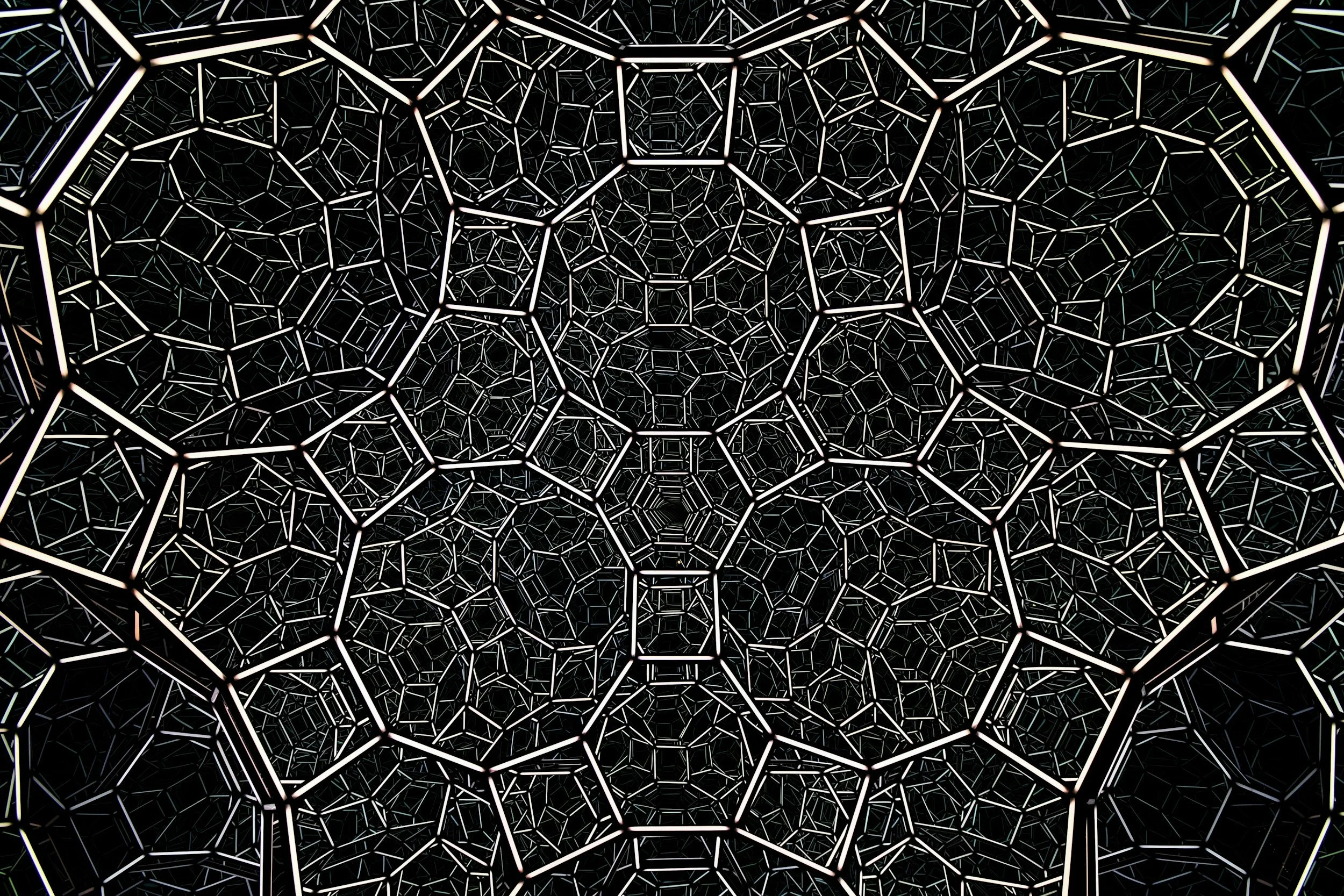
For decades, modern physics has lived with a fundamental disagreement. We use one set of rules for the tiny world of atoms (quantum mechanics) and a completely different set for the vast world of stars and gravity (general relativity). While both work perfectly in their own lanes, they refuse to speak the same language. My research introduces Fractal Dynamics (FD), unified field framework that reveals the disconnect isn't in our math, but in how we perceive the dimensions of time and space - fractal dynamic field.
What is a Fractal? — A Fractal is a pattern whose essential structure repeats across scales. Not a shape — a principle of organization. In FD, fractal self-similarity is the foundational architecture of reality itself, from subatomic standing waves to cosmological structure.
The most radical shift in Fractal Dynamics is the transition from a 4-dimensional world to a 6-dimensional one. In our daily lives, we experience three dimensions of space and one linear "arrow" of time. FD proposes that time is actually a three-dimensional field. Under this view, the "past," "present," and "future" are not gone or yet-to-come; they are specific probability fields within a 3D temporal lattice. What we perceive as the "linearity" of time is actually our brain’s way of navigating a much larger, dynamic landscape of possibilities. By recognizing time as a 3D field, fractal dynamics clarifies phenomena like quantum entanglement and distance healing.
A New Lens for Science

Fractal Dynamics offers more than just a new way to solve equations; it offers a new way to see ourselves. It suggests that consciousness and intention are not accidents of biology but are deeply woven into the 6-dimensional fabric of the universe. By understanding the resonance of the FD field, we move away from a universe of isolated parts and toward a unified understanding of reality where everything—space, time, and life—is part of a single coherent whole.